
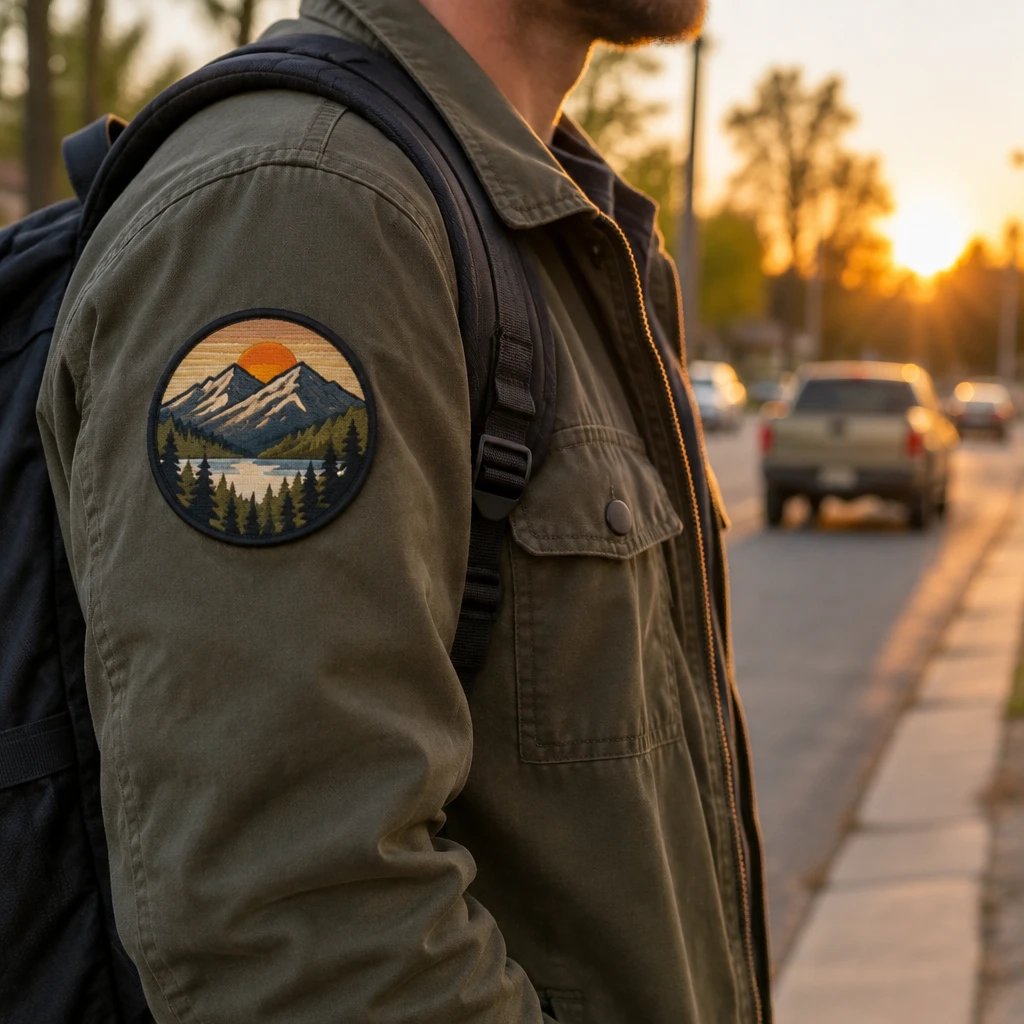
Size is the biggest specification-driven cost driver to settle first: a larger custom printed patch generally uses more fabric, backing, and finishing work. So, how much do custom printed patches cost? The quote depends on dimensions, construction, border, backing, quantity, artwork preparation, and deadline, rather than a single price that fits every design.
Quantity can change the unit price substantially, but it doesn't rescue an oversized design or a backing that won't suit the garment. I'd settle the finished size and attachment method before comparing quotes. Otherwise, you're comparing different products with the same logo.
How much do custom printed patches cost for your order?
An accurate dollar quote requires the artwork, finished dimensions, piece count, backing, border, and needed delivery date. Without those details, a price is only an assumption about what will be produced.
A printed patch is a fabric emblem that carries an image applied by printing rather than building the entire image from embroidery stitches. Polyester fabric is a common printable substrate, but the quoted construction should identify the actual material and finish. Don't assume every product called a printed patch has the same fabric, edge, or attachment layer.
USA Customized Patches has a 10-piece minimum. A free digital mockup is provided in about 12 hours, and production starts only after written approval. Quotes are available 24 hours a day, 7 days a week. Orders ship from Corona, CA, across the United States, including all 50 states.
Keep unit cost and order total separate. Increasing quantity may lower the price per patch while raising the amount you spend overall. Ask for the quote in US dollars and check whether shipping, artwork work, or any deadline-related charges are included or listed separately.
Which specifications raise or lower a printed patch quote?
Larger dimensions, more involved finishing, additional backing layers, difficult artwork preparation, and tighter deadlines generally push a quote upward. Simplifying those specifications can reduce cost, provided the patch still reads clearly and attaches correctly.
| Factor | Effect on cost | How to keep it down |
|---|---|---|
| Finished size | Larger patches generally require more face material, backing, and production area. | Measure the garment placement and use the smallest size that keeps the important text readable. |
| Printed detail and stitch count | A fully printed image has no embroidery stitch count. Added embroidered areas introduce stitching work and can raise cost. | Keep image detail printed unless raised thread texture serves a clear purpose. |
| Color count and color requirements | Extra printed colors do not necessarily add separate charges. Special matching, print methods, or hybrid thread colors can affect the quote. | Use the original color artwork and ask what the selected process includes before reducing colors. |
| Border and outline | Detailed contours, tight corners, and complex edge finishing can require more handling than a straightforward outline. | Remove fragile projections and choose a border suited to the shape. |
| Backing | Adhesive layers, hook backing, and a mating loop piece add material or processing compared with a plain sew-on construction. | Choose only the attachment system the garment needs. |
| Quantity | Larger runs can spread setup work across more pieces, often reducing unit cost while increasing the order total. | Combine a confirmed need for identical patches rather than buying speculative inventory. |
| Rush timing | A compressed schedule can require different production scheduling or faster shipping. | Provide the arrival deadline early and approve a complete mockup without avoidable revision cycles. |
| Artwork preparation | Rebuilding blurry lettering, cleaning edges, or making multiple versions can add work and may affect the quote. | Send the original art file, correct wording, and a single consolidated set of instructions. |
| Design variations | Different names, layouts, or colorways may create separate preparation and production requirements. | Use one shared design when individual identification is not necessary. |
These are directions, not a universal surcharge schedule. In our production experience, the expensive detail is often the one added without a use case: removable backing on a permanently sewn jacket patch, for instance, or embroidery texture on artwork chosen specifically for its photographic detail.
What size keeps a patch readable without wasting money?
The economical size is the smallest finished patch that fits the placement and preserves the information people actually need to read. Shrinking everything equally is rarely the right fix.
Example: a club is comparing a 3-inch-wide patch for a jacket chest with a 4-inch-wide version of the same artwork. The larger option generally consumes more material, but the smaller one may need the secondary slogan removed. If the club name and symbol remain clear, dropping the slogan is usually a better compromise than paying for extra width that crowds the zipper.
Measure the real garment. A cap's front panel has a curve and limited space between seams. A denim jacket back gives you more room, but a patch that crosses a yoke seam may sit poorly. A uniform sleeve has its own constraints, especially near a pocket or shoulder seam.
Width alone isn't enough. Include height, and state whether the dimensions describe the finished outside edge or just the printed image. A border takes up visible space. Artwork that looked comfortable on screen can feel crowded once the border and safe placement area are shown.
Cut a paper outline and hold it on the garment. Simple, useful, and much less expensive than discovering after delivery that the patch covers a pocket opening.
Do more colors and stitches make printed patches cost more?
Printed patches are not priced by embroidery stitch count unless the construction includes embroidered elements. Color count affects the quote through the chosen printing method and color requirements, not automatically through a charge for every visible shade.
That distinction matters. A gradient, shaded mascot, or photograph may contain many visible colors without requiring separate thread changes. Converting that same image to embroidery changes the production problem: now the design needs stitch paths, thread selections, and enough space for the stitched details.
For embroidered areas, bigger and denser usually means more machine time. Printed image density is different. A dark background doesn't create additional stitches just because it covers most of the face. Still, print coverage, fabric choice, and special color expectations should be reviewed rather than assumed to be irrelevant.
I'd keep a detailed event illustration printed. I'd consider thread when a bold emblem needs raised texture more than subtle shading. The printed patch construction options help establish the first choice, while woven patches for fine lettering offer another fabric-based approach worth comparing for flat logos and text.
For a bold club crest, you can request a free digital mockup through the embroidered patch hub to compare a thread-based treatment before choosing the construction. Use the same finished size for the comparison, or the cost difference won't tell you much.
See your artwork as a custom USA patch before you buy. Free digital mockup in 12 hours — 5-piece minimum per design. We do not produce until you approve.
GET A FREE MOCKUPWhich border gives the right finish for less work?
A straightforward outline with an appropriate edge finish is usually easier to produce than a shape full of narrow points and deep notches. The least expensive suitable border depends on the fabric and shape, so don't assume one edge type always wins.
A merrowed border is a wrapped thread edge that gives a patch a raised, rounded perimeter. It suits many conventional shapes and creates a familiar uniform-patch appearance. It also occupies space around the artwork, which matters when lettering sits near the outside edge.
A heat-cut border is a trimmed, heat-finished edge that can follow contours on suitable synthetic materials. It can be useful for shapes that don't suit a wrapped border, though tiny projections can still be awkward to handle and attach.
Example: a running club's winged shoe design has narrow lace tips sticking beyond the main outline. I'd bring those details inside a cleaner silhouette. The illustration stays recognizable, the perimeter is easier to finish, and there's less chance of a delicate point catching during wear.
Ask the mockup to show the actual border type and color. A line around an illustration is not necessarily a production border, and confusing the two can change both the finished look and the quote.
Should you pay for sew-on, iron-on, or hook-and-loop backing?
Pay for the backing that matches the garment and its use, not the one with the longest feature list. A plain sew-on patch is often enough for permanent attachment, while removable patches need a compatible hook-and-loop system.
Sew-on for a permanent jacket or uniform placement
A sew-on construction avoids adding a heat-activated adhesive or removable fastening layer. It's a sensible starting point for denim jackets, work shirts, and club vests when someone will stitch the patch down anyway. Remember the installation cost, though. A lower patch quote doesn't make sewing labor disappear.
Iron-on when the garment can take the application conditions
Iron-on backing is a heat-activated adhesive layer that bonds under suitable temperature, pressure, and dwell time. It adds a processing step and must suit the garment. Coated outerwear, heat-sensitive fabrics, and awkward cap surfaces need more caution than a flat cotton panel.
I'd skip an iron-on assumption for a waterproof shell until the garment's application limits are checked. Saving installation time isn't useful if the heat damages the finish. Follow the supplied application instructions rather than borrowing settings from a different patch order.
Hook-and-loop when removal is part of the job
Hook backing is a fastening layer that grips a compatible loop surface. It makes sense for interchangeable uniform identifiers, range bags, and equipment panels already built for removable patches. Confirm whether the quote includes only the hook side or also a separate mating loop piece.
Extra backing is wasted money when the patch will be sewn permanently in place and never removed. Conversely, ordering a plain patch for an existing loop panel just transfers the problem to whoever has to retrofit it.
When does ordering more patches actually save money?
Ordering more can reduce unit cost because preparation and setup work are spread across more pieces. It saves useful money only when the additional patches have a realistic purpose.
Example: a run club needs 40 patches now and is considering 60 to cover confirmed new members. Request both quantities with identical dimensions, borders, and backing. Compare the total difference, not just the lower unit figure, then decide whether the extra stock is worth tying up the budget.
Dated event patches deserve extra restraint. Once the race, reunion, or tournament passes, leftovers may have little value. An undated club emblem is easier to keep for future members, replacement jackets, and damaged uniforms.
Don't treat mixed artwork as one identical run. Changing a name, sponsor mark, or background color may require separate preparation and production handling. Tell the estimator about every version before comparing quantity options, and confirm how minimums apply to the proposed variations.
A reorder is not automatically the same price as the original order. Quantity, material availability, backing, timing, and shipping can change. Keep the approved artwork and specifications together so the next quote starts with the same product.
Ready to spec type, size, backing, and quantity? Open the quote form for a free 12-hour mockup and USA shipping after approval.
GET A FREE MOCKUPWhat artwork preparation can change the quote?
Artwork preparation becomes more involved when the supplied file cannot reproduce clearly at the requested size. Missing lettering, rough edges, unclear colors, and multiple conflicting versions can all add work.
Send the original logo or illustration when available, not a screenshot pulled from a social profile. Vector artwork is useful for logos and clean shapes. A properly sized, high-resolution raster image may be appropriate for photographic artwork. Converting a blurry screenshot into a vector file doesn't automatically recover the missing detail.
The free digital mockup shows the proposed design before production. It should make the layout, dimensions, border, backing choice, and spelling clear enough to approve. Extensive reconstruction or special artwork requests should be discussed in the quote rather than assumed to be covered by the word free.
Collect feedback before sending revisions. A club treasurer asking for a smaller crest while the captain asks for larger lettering can create conflicting directions, especially when both changes arrive separately. One consolidated correction list is easier to check and less likely to push approval toward the deadline.
Screen color is not a physical fabric sample. In our production experience, the mockup is most useful for catching layout and specification mistakes; it cannot reproduce fabric texture, garment curvature, or every color shift between a display and the finished material.
Will a rush deadline change production or shipping costs?
A rush deadline can affect both production scheduling and shipping, which are separate parts of the order. Give the required arrival date and destination before approval so feasibility and any added costs can be checked together.
USA Customized Patches lists a typical timeline of 7-12 business days. Confirm how that timeline applies to your specifications and destination, including when the clock starts and whether transit is included. A typical timeline is not a promise for every construction, quantity, or last-minute event.
Production starts only after written approval. An unresolved spelling correction or backing decision leaves less time for manufacturing, even if the original inquiry arrived early. Faster shipping cannot recover time that is still being spent deciding what to make.
Orders ship nationwide from Corona, CA. Check the United States shipping information and provide the delivery ZIP code, especially when the patches must arrive before a tournament, trade show, or uniform issue date. Ask for an arrival plan, not merely a ship date.
What should you send to get comparable patch quotes?
Send one complete specification sheet with the artwork and ask each quote to use the same requirements. That makes differences in dollars meaningful instead of hiding changes in materials, attachment, or delivery.
- Name the use case and garment. State whether the patch goes on a cotton work shirt, curved cap, denim jacket, club vest, or removable equipment panel.
- Give finished width and height in inches. Include a photo of the placement if seams, pockets, or a limited panel area could interfere.
- Attach the original artwork and identify the required wording. Flag brand colors and any small detail that must remain recognizable.
- Specify printed construction and the proposed border. If you are open to alternatives, request them as separate options rather than allowing an unexplained substitution.
- Choose the backing. For hook-and-loop orders, state whether the garment already has a loop panel and whether a mating piece is needed.
- List the quantity for each design. Keep identical patches separate from personalized versions so the quote reflects the actual preparation work.
- Provide the arrival deadline and delivery ZIP code. Ask for the USD order total, unit price, shipping treatment, and any separately listed charges.
If the specification is still taking shape, send the artwork and garment details through the patch quote and mockup contact form for a free digital mockup before production. Mark the features you're willing to change, such as size or border, so a lower-cost alternative doesn't quietly remove something essential.
What this cost advice is based on
This advice rests on the patch production process, the digital mockup review, and the specifications used to prepare an order. It describes how material use, finishing, attachment layers, preparation, and scheduling affect a quote, not a published price schedule.
In our production experience, the most useful savings come from removing work the patch doesn't need while protecting readability and attachment. Before approving, put the quoted dimensions, border, backing, quantity, and delivery requirement beside the mockup. Any mismatch belongs in the correction round, not on the finished jacket.