
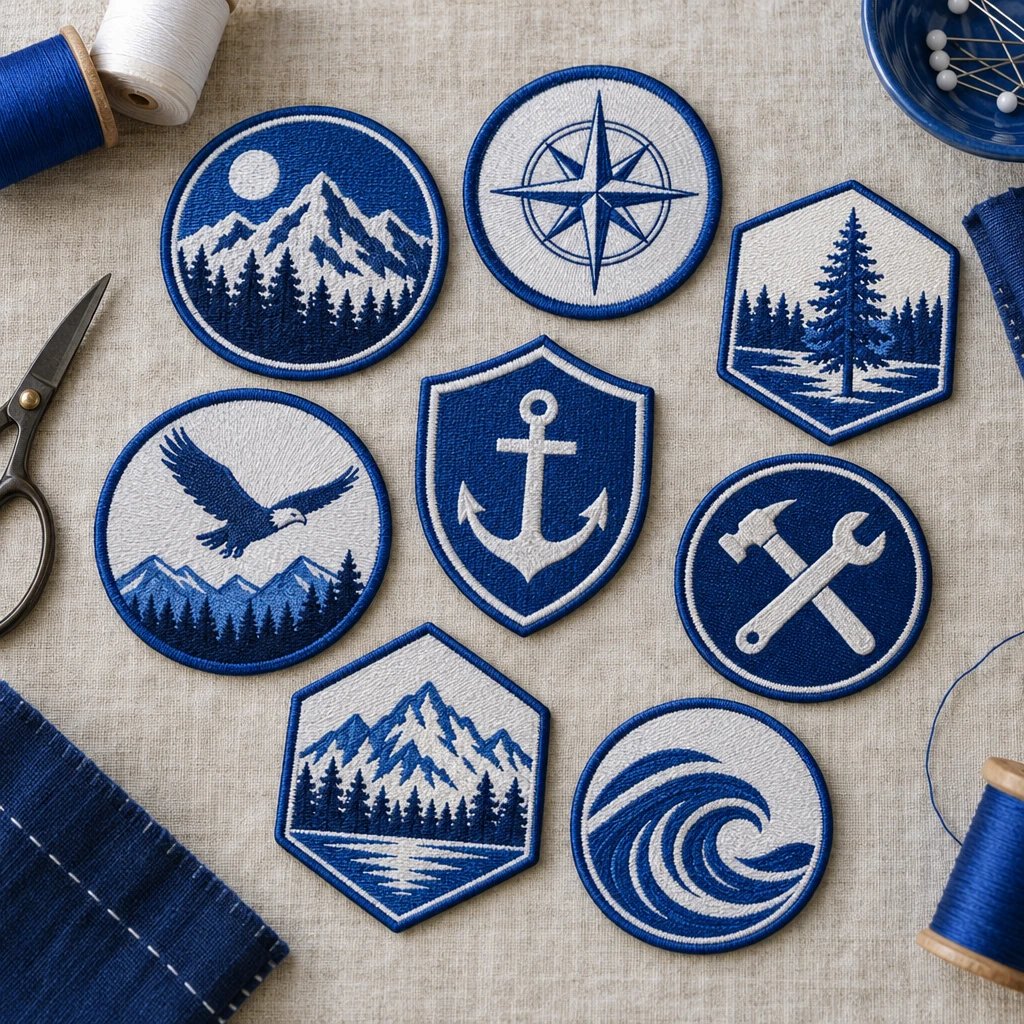
This Louisville custom patch FAQ is for United States teams, brands, clubs, and businesses that need answers about order minimums, artwork files, and shipping. USA Customized Patches has a 10-piece minimum, provides a free digital mockup before production, and produces patches only after written approval. Orders ship from Corona, California, to Louisville and all 50 states.
Louisville custom patch FAQ: how many patches do I need to order?
The minimum order at USA Customized Patches is 10 pieces. If your request includes different logos, sizes, or color versions, have the quote identify how those variations will be counted before you approve it.
A small order is useful when a club needs its first jacket patches or a business is testing a patch on a new work shirt. It also limits the amount of finished inventory sitting on a shelf. The trade-off is that setup work gets spread across fewer pieces, so a smaller order can carry a higher per-piece cost than a larger run.
For example, a Louisville run club might order 10 matching patches for volunteer caps before committing to a broader merchandise run. That's a sensible test if the artwork and cap model are settled. Ordering extras before checking cap fit is not.
Check the quantity line carefully. Different backings, individual names, and revised artwork should not be treated as interchangeable details in an otherwise identical order.
What artwork files should I send for a patch quote?
Send the cleanest original artwork you have, preferably a vector PDF, AI, or EPS file with lettering converted to outlines. A clear PNG or JPG can also support an initial review, but the file extension alone doesn't tell us how much usable detail it contains.
A vector file is artwork built from paths that can be resized without turning its edges into enlarged pixels. That helps when adjusting a logo to the patch outline. A PDF containing a blurry screenshot is still a blurry screenshot, even though the filename looks production-ready.
Don't hold up the conversation because your artwork isn't perfect. A sketch can explain the layout, provided you also send the exact wording and intended shape. The trade-off is interpretation: a production artist needs to know which rough edges are intentional and which need cleaning up.
- Attach the original logo file instead of a screenshot from a social media page.
- Type the exact wording in the message, including punctuation and capitalization.
- State the finished width and height in inches, including the border.
- Identify any logo elements that cannot change.
- Name the garment and intended placement, such as a structured cap front or denim jacket back.
Before sending, open the attachment yourself. Missing fonts, hidden backgrounds, and outdated artwork versions create avoidable revisions.
Will small lettering and detailed logos work in embroidery?
Small lettering and closely spaced details may need simplification for embroidery. In our production experience, readability depends on the letter shape, spacing, thread direction, and finished patch size, not just how sharp the source file looks.
Thread occupies physical space. Narrow gaps can close, counters inside letters can become crowded, and a thin outline may compete with the lettering it surrounds. A screen preview enlarged to fill a monitor hides those problems.
For example, a 3-inch cap patch with a club name, founding date, skyline, and full slogan may need something removed. I'd drop the slogan before shrinking every element. A readable name does more work than a crowded collection of details.
If the small text is essential, consider a woven construction or increase the finished size. The trade-off is texture or placement: woven detail looks flatter, while a bigger embroidered patch may no longer fit the cap. Check a true-size printout of the proposed layout, not only the enlarged mockup.
How do I measure a patch for a hat, jacket, or work shirt?
Measure the usable garment area first, then choose a finished patch width and height that fit inside it. Finished dimensions should include the outside border, because that edge also needs room on the garment.
A cap front isn't a flat sheet. The crown curves, a center seam may sit underneath the design, and the lower edge approaches the visor. Work shirts have different obstacles: pocket flaps, plackets, reinforcement stitching, and seams that can interfere with sewing.
- Lay out the actual garment model you intend to use, not a similar item.
- Measure the clear placement area in inches, noting nearby seams and hardware.
- Cut a paper outline at the proposed finished patch dimensions.
- Position the outline on the garment and look at it both flat and worn.
- Send the approved dimensions and placement notes with the artwork.
For example, a 3-inch-wide rectangle may fit a jacket chest but look crowded on a low-profile cap. Keep those placements separate in the order notes. A shared size simplifies ordering, but separate sizes can produce a better fit. Check that the mockup labels match the paper outline you actually tested.
Should I choose embroidered, woven, printed, or PVC patches?
Choose embroidery for visible thread texture, woven construction for finer lettering, printing for image-based artwork, and polyvinyl chloride (PVC) for a molded surface. The right choice follows the artwork and garment use, not a rule that one material is always better.
| Patch construction | Useful for | Main trade-off | Check before approval |
|---|---|---|---|
| Embroidered thread on a fabric base | Club jacket emblems, work shirt logos, and cap designs with bold shapes | Raised thread texture takes space that fine lettering may need | Text spacing, stitch coverage, and the finished outside dimensions |
| Woven thread construction | Compact logos with fine lettering or closely spaced lines | A flatter appearance with less raised texture than embroidery | Legibility at actual size and the selected edge finish |
| Printed fabric construction | Gradients, photographs, and artwork with subtle color transitions | The image is carried by printing rather than raised thread | Image resolution, crop, fabric choice, and care instructions |
| Molded polyvinyl chloride (PVC) | Gear emblems and designs that suit a flexible molded surface | The molded look differs substantially from a traditional cloth badge | Thickness, attachment method, and compatibility with the intended gear |
I'd choose straightforward embroidery for a bold club crest on a denim jacket. If the same crest needs tiny lettering on a cap, woven patches for fine-detail logos deserve a look. Keeping a favorite material at the expense of readable artwork rarely pays off.
For a thread-textured design, request a free digital mockup through the embroidered patch ordering page with your garment and finished dimensions. That gives the layout a real placement constraint instead of leaving size to guesswork.
Is sew-on or iron-on backing better for my garments?
Sew-on attachment is the right call for many regularly washed garments when stitching is practical. Iron-on backing can be convenient, but only when the garment tolerates the required heat and the application equipment can deliver suitable pressure.
See your artwork as a custom USA patch before you buy. Free digital mockup in 12 hours — 5-piece minimum per design. We do not produce until you approve.
GET A FREE MOCKUPA sew-on patch is a patch attached with stitching through its edge or designated sewing area. Iron-on backing is a heat-activated adhesive layer that bonds under specified application conditions. Those conditions matter more than the word convenient on an order form.
I'd skip untested heat application on a coated rain shell or a heat-sensitive performance shirt. Structured caps also complicate matters because the crown doesn't sit flat under a household iron. Confirm the garment care label and the decorator's equipment before selecting adhesive backing.
Hook-and-loop backing makes sense when a patch needs to be removable, but the garment needs a compatible loop area. Adhesive convenience, removable attachment, and permanent sewing solve different problems. Check whether both mating sides are included when ordering hook-and-loop, and don't assume a backing choice includes garment installation.
Which patch border should I use for a simple shape or detailed outline?
A merrowed border suits many simple patch shapes, while a cut edge can follow a more detailed outline. Border selection should account for the shape, material, and space left around the artwork.
A merrowed border is an overlocked thread edge that wraps around the patch perimeter. It gives a traditional badge a defined rim. That rim also occupies space, so lettering placed too close to the outside can feel squeezed even when the overall dimensions haven't changed.
Cut edges can handle outlines that a thick wrapped edge would simplify or obscure. The trade-off is a different edge appearance, and not every material uses the same cutting or finishing process. Ask for the actual edge specification rather than treating every shaped border as identical.
For example, a circular team emblem can usually keep its simple rim, while a skyline silhouette may need a different finish. Check narrow projections and inward corners. Patch layout examples in the gallery can help explain the look you mean, but your own outline still needs review.
How closely can patch colors match my logo?
Patch colors can be selected against supplied references, but a screen mockup is not a physical color standard. Thread, fabric, ink, and molded PVC each reflect light differently, so the same logo color can look different across constructions.
Send an established brand color reference if you have one. Also identify which colors matter most. A club may accept a close blue but need strong contrast between white lettering and a dark background; a brand may have tighter requirements for its main logo color.
In our production experience, buyers sometimes focus on matching an individual shade and overlook the surrounding material. A thread color that separates clearly from black fabric may blend into a similarly colored garment. Context changes readability.
The trade-off is between convenient digital review and physical verification. If color is critical, ask what physical confirmation options are available and whether they affect cost or scheduling. Check the border, background, and lettering colors separately rather than approving the logo color alone.
What does the free digital mockup show, and what am I approving?
USA Customized Patches provides a free digital mockup in about 12 hours, and production starts only after written approval. The mockup is a layout proof, not a photograph of a finished patch or a substitute for the written order specifications.
Review the proof and specification sheet together. Artwork can look right while the backing or finished size is wrong. A mockup may show the face clearly without displaying what goes on the back, which is why a short written approval checklist matters.
- Read every word, including dates, abbreviations, and small perimeter text.
- Confirm the finished width, height, and outside shape.
- Review the material, visible colors, border type, and layout.
- Match the backing and quantity to the written quote.
- Resolve requested changes and identify the final proof version before giving written approval.
A digital proof makes revisions easier before manufacturing, but it cannot reproduce thread sheen or garment feel. That's the trade-off. Check the final revised version even if the only requested change was a spelling correction.
If the file is ready but the construction isn't settled, send the artwork and placement notes for a free mockup. Include the decision you're unsure about so the review addresses it directly.
What information do you need to give me an accurate price?
An accurate patch quote needs the artwork, quantity, finished dimensions, construction, backing, and shipping destination. Ask for the quote in US dollars (USD) with the included services and delivery charges clearly identified.
Size and construction affect material use and production work. Dense embroidery, specialized finishes, and multiple versions can also change the quote. A request for a logo patch without dimensions leaves too many variables open for a useful comparison.
For example, compare quotes for the same 3-inch embroidered emblem with the same border, backing, quantity, and delivery ZIP code. Comparing that order with a smaller woven version doesn't tell you which supplier offers the better value. It tells you the products are different.
A simpler option may be enough. If the patch is going onto a tote bag by sewing, an additional adhesive backing may serve no purpose. Check the total order cost rather than the unit price alone, and ask whether any requested physical sample or special handling sits outside that total.
How long should I allow before my Louisville event?
Typical timing is 7–12 business days, but the quote should confirm what that window includes for your order. A free digital mockup in about 12 hours is an artwork step, not a promise that finished patches will ship within that time.
Production cannot start before written approval. If a committee takes extra time to settle a color or wording change, that time needs to be accounted for in the event plan. Fast artwork delivery doesn't recover days spent waiting for an internal decision.
Ready to spec type, size, backing, and quantity? Open the quote form for a free 12-hour mockup and USA shipping after approval.
GET A FREE MOCKUPGive the actual in-hand date and explain what happens after delivery. A club handing out loose patches has a different schedule from a shop that still needs to sew every patch onto jackets. Receiving the box on event morning is not useful if garment installation remains.
Check whether the quoted schedule includes shipping transit and any attachment work you're arranging separately. USA Customized Patches is open 24 hours a day, 7 days a week for quotes, but quote availability does not mean manufacturing and carrier movement use a continuous calendar-day schedule.
Where do Louisville patch orders ship from, and can you ship nationwide?
USA Customized Patches ships orders from Corona, California, to Louisville, Kentucky, and all 50 states. Nationwide shipping covers the United States, but the destination and selected service still affect transit planning.
Provide a complete delivery address with the recipient's name, business name when applicable, street address, suite or unit, city, state, and ZIP code. If the box is going to a decorator instead of your office, make that explicit before the shipping details are finalized.
A shipping origin is not a country-of-manufacture statement. If domestic manufacturing is a purchasing requirement for your organization, request written confirmation of the specific order's manufacturing origin before approval rather than inferring it from the Corona shipping address.
The trade-off between delivery services is generally cost versus transit speed, not a change in patch quality. Check the shipping information for United States orders and confirm the service quoted for your address. Local event dates, receiving hours, and building access instructions belong in the order notes.
Can I change my artwork or add patches after approval?
Request changes immediately, but don't assume artwork or quantity can be changed once production has started. Written approval releases the agreed design and specifications for manufacturing.
Before approval, consolidating feedback is usually more efficient than sending separate messages from several club officers. Name someone to collect corrections and return a single clear list. Conflicting instructions about the border color or club wording can slow the proof stage without improving the patch.
After approval, the effect of a change depends on the production stage. Ask for confirmation of any cost or schedule adjustment before treating the revision as accepted. An extra quantity may need to be handled differently from a correction to the existing artwork.
The trade-off is flexibility versus keeping the approved schedule intact. Check the quantity against your actual distribution plan before signing off, including any pieces needed for garment testing. Don't rely on an email requesting a change unless the updated order has been confirmed.
How do I make a future patch reorder easier?
Keep the final approved proof and complete order specifications together so a reorder has a clear reference. A logo file alone doesn't preserve the size, border, backing, material, and color decisions that made the original patch.
Save the order reference, approved artwork version, written dimensions, construction, backing, and any important color notes. A physical patch is useful too, especially when the original design used subtle background or thread differences that a phone photo doesn't show reliably.
Reordering the same specifications is different from adapting the design. Moving a jacket emblem onto a smaller cap patch can require new spacing, larger lettering relative to the outline, or a construction change. Treat it as a fresh size review, not an automatic reduction.
The trade-off is consistency versus improving a design that has changed uses. Check current availability and the new quote rather than assuming every detail, price, or schedule remains unchanged. Confirm the 10-piece minimum again when planning the next order's quantity.
What is this patch-ordering advice based on?
This advice rests on the production process, the digital mockup review, and the written specifications that define an order. Recommendations about readability, border clearance, and garment fit reflect production realities rather than customer reviews or ranking claims.
The most important distinction is between what can be checked digitally and what needs physical confirmation. Wording and dimensions belong in proof review. Thread feel, a garment's heat tolerance, and the way a patch sits over a cap seam cannot be settled by making the screen image larger.
A useful specification connects all those choices: artwork, finished dimensions, material, border, backing, quantity, and delivery requirements. Changing one can affect another. More detail may need more space; a different garment may need a different attachment method.
Before giving approval, compare the final proof with the actual garment and your written order. If a detail exists only in a phone conversation, have it added to the order notes.